How Netflix makes a personal sizzle reel for every member from one edit
A sizzle reel is the fast montage that sells a collection of shows, and Netflix used to cut each one by hand. Now editors build a single library of clips and software assembles a different reel for every member at playback. Here is how it works, and what it means for anyone who makes video for marketing.
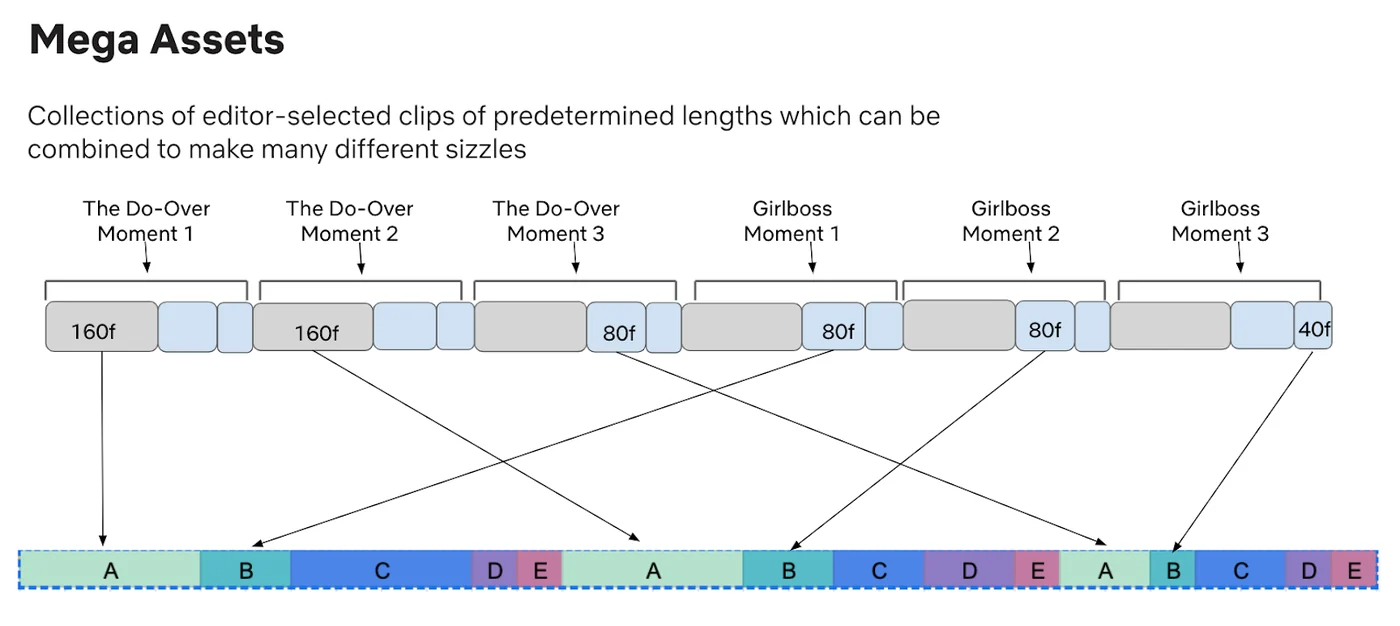
A sizzle reel is a fast montage of clips from different titles, cut together to get people excited about a collection: award nominees, a holiday lineup, a festival such as Chuseok. Netflix already personalized artwork and trailers for each member, but every sizzle reel was still edited by hand, one version for everyone. In November 2023 Netflix's engineers described Dynamic Sizzles, a system that assembles a different reel for each member, in real time and on demand, from a single library cut by human editors. Netflix reports savings of up to 70 percent in time and cost compared with a manually created reel. For anyone who makes video for marketing, the interesting part is not the personalization itself. It is the editing discipline that makes it possible.
The problem: one reel for millions of different tastes
A hand-edited reel takes time and money, and it cannot be personalized: the same montage plays for the member who only watches documentaries and the one who only watches K-dramas. Netflix calls personalization "a bedrock principle", and a reel that ignores it wastes some of the most valuable seconds on the screen.
The obvious fix, editing more versions, does not scale. With dozens of titles in a collection and several moments per title, the combinations run into what Netflix calls "thousands, if not millions". No editing team can cut that many reels, and nobody should want to render and store them all.
How they built it
The design splits the work between people and software, and each side does what it is good at.
Editors build one Mega Asset. Human editors pick the clips, checking that each one works both creatively and technically, and lay them out on a single timeline in a fixed, known order. Each title gets clips in three set lengths: 160, 80 and 40 frames. That library is the Mega Asset, shown in the diagram at the top of this article, and Netflix says millions of unique reels can come from a single one. Marking every clip's position by hand was "an extremely tedious and time consuming process for an editor", so Netflix wrote an Adobe Premiere plug-in to do it, and the team can validate the whole structure just by reading the timecodes.
A cadence sets the rhythm. A cadence is a predefined pattern of clip lengths that says when, where and for how long each title appears. It keeps the reel balanced across the chosen titles while still giving more time to the ones ranked highest for that member, and Netflix notes the cadence itself can be personalized or randomized.
Personalization picks the titles. When a reel is requested, Netflix creates the member's personalized, sorted list of titles, and the top titles fill the cadence, the highest-ranked getting more weight in placement and screen time.
Timecodes, not new videos. Netflix stores every clip's timecode in Hollow, its open-source in-memory data library, under keys as simple as titleId-clip-1. Because the order of the Mega Asset is known, finding any clip is a quick lookup. What goes back to the member's device is a list of start and stop times, and the player streams those pieces of the Mega Asset one after another. That took real engineering. Devices had to signal that they support the feature, and Netflix admits that changing the API and rolling it out took time. Background music has to run continuously across the cuts, so audio and video are stitched separately and kept in sync. And the streaming logic, built for long continuous video, had to be retuned for "dozens of discontiguous tiny segments".
What Netflix reports, and what it does not
Netflix's one number is the saving: up to 70 percent in time and cost against a manually created reel, by its own measure. The post does not report an engagement result or an A/B test, and it does not say how the title ranking is produced. So read Dynamic Sizzles as a production-efficiency story first. Better engagement is the goal Netflix states, not a result it has published.
What has changed since
Netflix has not published a follow-up on Dynamic Sizzles, but its direction since then runs through the same idea: understand every piece of footage, then choose per member.
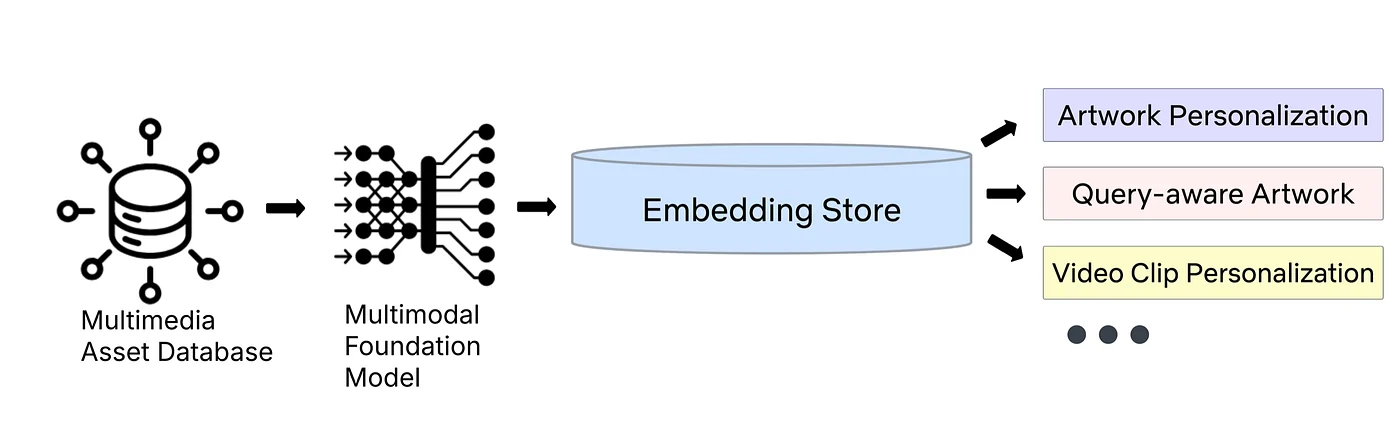
- Machines now read the footage. In February 2026 Netflix described MediaFM, a model pre-trained on parts of its catalog that turns each shot into an embedding from its video, audio and subtitles. Its uses include "optimized promotional assets (like art and trailers)", although Netflix is careful to say the outputs inform its teams rather than run end to end.
- Choosing the preview got a shared brain. In August 2026 Netflix described MAPS, which personalizes artwork and video previews using embeddings from a shared store. For artwork it replaced five canvas-specific models with one, and after a five-week online test Netflix shipped MediaFM "as the default video preview embedding across all platforms".
- The highlight reel became a feed. Netflix's redesigned mobile app, announced in April 2026, adds Clips, a vertical feed of short clips that Netflix describes as "a personalized highlight reel".
- Generative AI entered the promo pipeline. Netflix said in October 2025 that it uses generative AI to localize promotional assets into many languages, and in May 2026 that it uses AI to adapt advertisers' existing assets to formats such as vertical video and pause ads.
Outside Netflix, the ad platforms now offer a version of this to everyone. Meta's Advantage+ creative "automatically adjusts ad creative for each person who views your ad" and has since added generative image, text and video tools. TikTok launched its Symphony creative AI suite in 2024 and announced the Symphony Assistant in Jakarta that October. Google's Performance Max generates text and image assets from what an advertiser provides.
Why it matters for your business
Indonesia is one of the biggest video markets in the region. The e-Conomy SEA 2025 report by Google, Temasek and Bain counted 2.6 billion video commerce transactions in Indonesia in 2025, up 90 percent in a year, and Netflix plans to bring its ad-supported plan to Indonesia from 2027. More placements, more formats and more audiences push up the number of versions a brand should make, while production budgets stay where they are.
Dynamic Sizzles shows a way out that does not depend on generating new footage:
- Shoot and edit for recombination. The real work is in the Mega Asset: clips of fixed lengths, chosen by a person, in a known order. The same footage, cut into self-contained beats of set lengths, can become hundreds of versions.
- Let people own taste and software own combinations. Editors decide what is good. Software decides who sees which good thing.
- Measure before you believe. Netflix published a cost saving, not an engagement lift. Before you scale personalized creative, hold out a group that sees one strong edit and check that the versions actually beat it.
How we would build it today
This is our home ground, so here is the concrete version. For a brand campaign we would plan the shoot as a library from day one: product, people, place and offer moments, each cut in two or three fixed lengths, plus one music bed with marked beats so every cut lands on the rhythm. A small service holds the clip index and a few cadence templates, and picks clips per audience: by city, by language, by product interest, or by where the viewer is in the funnel. On your own website or app, the reel can be assembled at playback the way Netflix does it. Encode one master with a keyframe at every clip boundary, so any combination streams without re-encoding, and keep the music on its own track. Ad platforms want finished files, so the same index renders the top combinations with ffmpeg in minutes, and the platform's creative testing picks the winners. AI earns its place in building the library, not in the final cut: a vision-language model can tag every shot and suggest candidate moments, and an editor approves what goes in. Then a holdout group sees the single best edit, so the personalized versions have to prove they are worth it.